

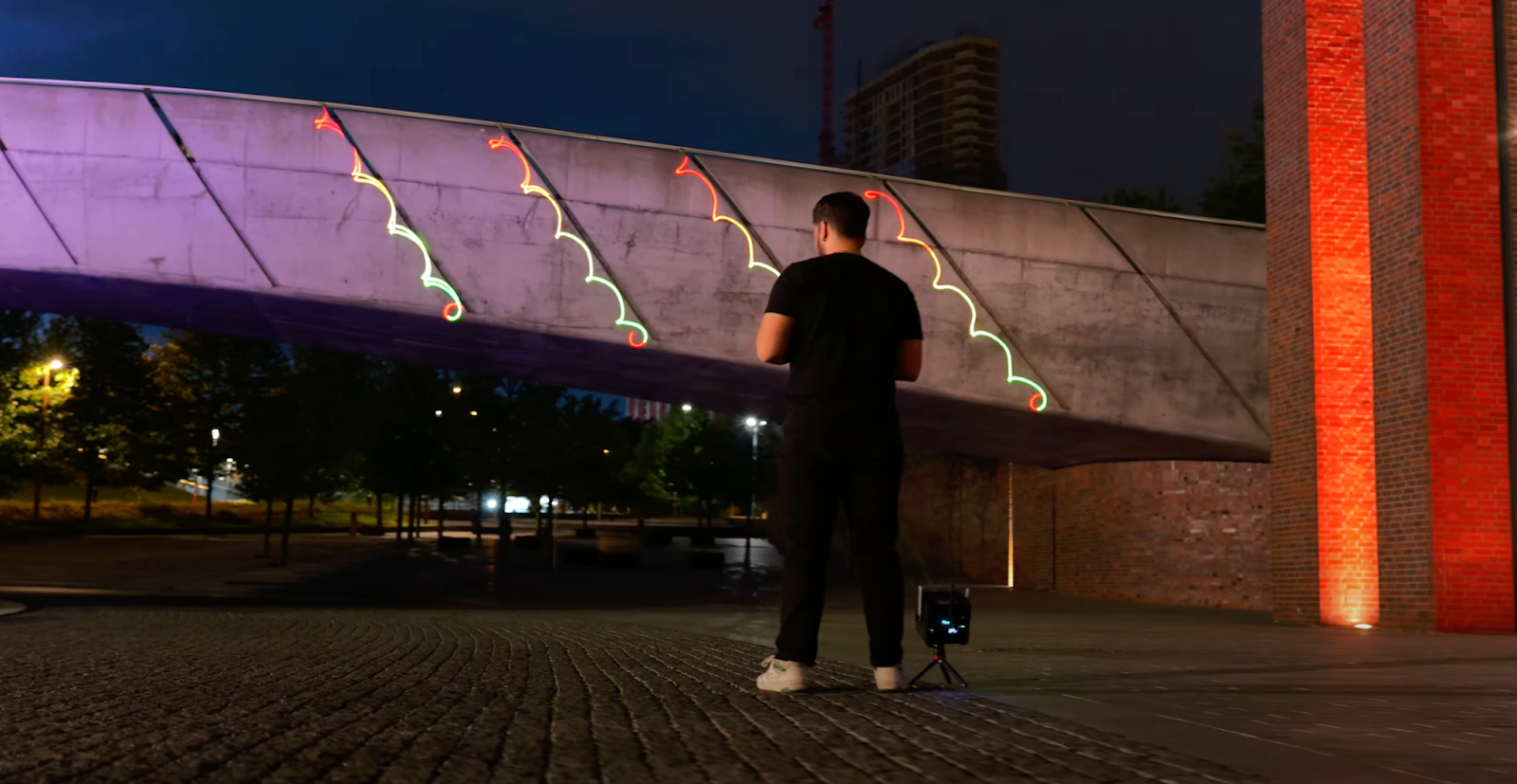
Architectural Laser Mapping with Portable Projectors
Getting noticed in a busy city is hard. Since traditional billboards are expensive and printed posters often get ignored, business owners and marketers are looking for fresh ways to grab attention.
This is where architectural laser mapping helps. By turning the side of a building into a bright, moving billboard, it offers a high-impact approach to outdoor advertising without the waste of paper or plastic.
What is Architectural Laser Advertising?
Architectural laser advertising uses high-power light to project images onto structures. You can trace the outline of windows, doors, and roofs, or simply project a large logo across a brick wall.
Often called laser architecture, this technique transforms static structures into dynamic art. Unlike a standard video projector, a laser produces a sharp, bright beam that stays focused at any distance.
This means you can create a crisp graphic on a wall hundreds of feet away, working well for promoting events or launching products. The result is an architectural laser light show that people want to photograph and share.
Why Go Portable?
In the past, lighting up a building required a large budget because you needed heavy equipment and a generator for power. With cables running everywhere, you often needed complex special permits just for the setup.
Now, technology allows for a different approach where small, battery-powered devices change the workflow entirely. You can set up a projector on a sidewalk, map a building, and be gone in minutes.
This speed is helpful for guerrilla marketing, allowing you to create agile, “pop-up” displays that leave a lasting impression without a permanent footprint.
Choosing the Right Equipment
To map a building effectively, the gear needs to meet specific requirements: it must be bright enough to compete with streetlights but small enough to carry easily. Please always check local regulations before you start.
When looking for equipment, prioritize these features:
- High Power: You typically need at least 7,000 mW (7.5W) of brightness for outdoor city use.
- Portability: The unit should fit in a backpack to keep the operation low-profile.
- Standalone Capability: The ability to run shows without a laptop simplifies the setup even further.
The LaserCube Ultra MK2 (specifically the 7.5W model) is a prime example of this new class of projector. It packs professional specs into a portable unit.
Note: For outdoor use, always ensure you have the appropriate Rain Cover accessory, as precision electronics require protection from the elements.
How Laser Mapping Works
You might think mapping a building is complicated, but modern software has streamlined the process significantly.
Using tools like LaserOS, the workflow is designed for speed:
- Tracing: Point the laser at the building and drag digital corners on your phone to match the physical structure.
- Masking: This is a critical step. You can draw “blackout zones” in the software to prevent the laser from hitting windows, cameras, or pedestrians.
- Content: Import standard image files, and the software converts them into laser paths automatically.
Safety and Responsibility
While portable lasers allow for quick setups, safety remains the priority. Professional architectural laser mapping requires awareness of your surroundings.
- Termination: Always ensure the laser beams end on the building surface and do not shoot into the sky, which could distract aircraft pilots.
- Crowd Safety: Keep beams at least 3 meters (10 feet) above any area where people are standing.
- Permissions: Even for temporary displays, it is wise to check local regulations regarding outdoor signage and projection.
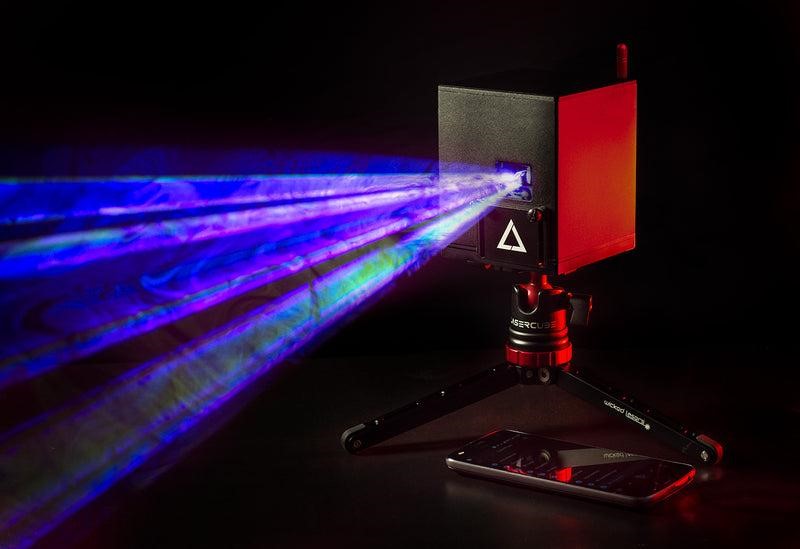
Getting Started with LaserCube
Using an architectural laser is a unique way to put a brand in front of people because it is bright, unexpected, and effective.
With the right portable tools like the LaserCube Ultra MK2, the whole city becomes a canvas. You can turn any blank wall into a display that stops traffic and gets people talking.