

EDM Laser Lights: Which Portable Setup Fits Your Show?
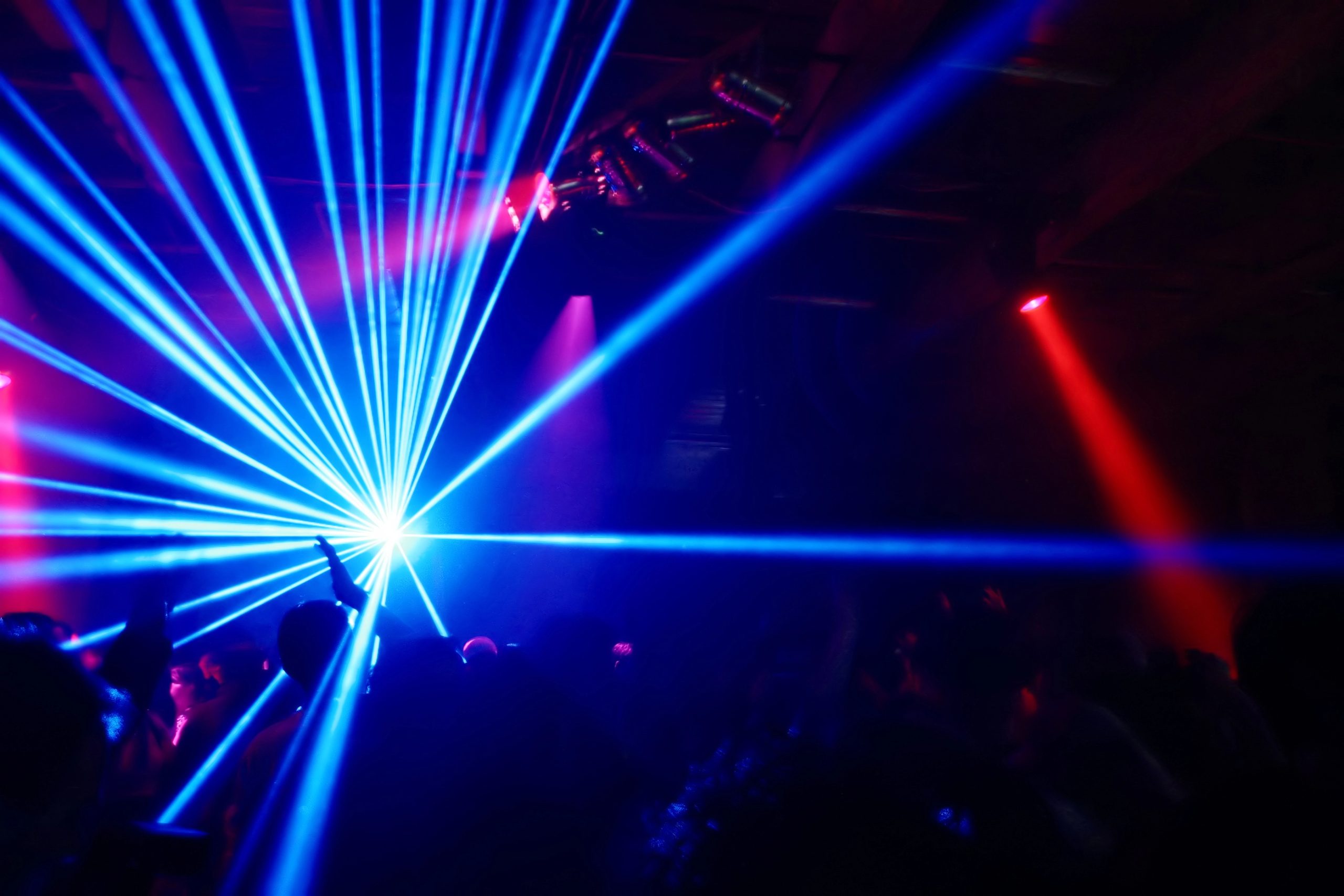
Electronic dance music relies on dramatic shifts in energy. Slow-burning builds give way to white-noise sweeps and heavy sub-bass drops. When relying solely on conventional LED wash fixtures or moving heads, a visual rig often struggles to match the speed and attack of an electronic music track.
Dedicated RGB laser projectors bridge that visual gap. Compact systems now give DJs and visual artists the power to project large, synchronized aerial shows directly from a backpack, eliminating the need to haul heavy touring racks or hire outside rigging crews.
What makes electronic music laser shows visually distinct?
Live electronic sets demand visual systems capable of instantaneous response. Unlike incandescent or LED stage fixtures that rely on motorized heads or mechanical lenses, true EDM laser systems create shapes using two high-speed motorized mirrors known as galvanometer scanners.
By tilting across horizontal and vertical axes tens of thousands of times per second, these mirrors steer a concentrated beam fast enough to draw solid geometric boxes, sweeping overhead fans, and deep spatial tunnels without flickering.
Paired with analog color modulation, modern diodes continuously blend red, green, and blue wavelengths across 16.7 million shades. This control allows a performer to run subtle, single-color fades during ambient breakdowns, then instantly trigger brilliant pure-white strobes the exact millisecond the drop hits.
Match visual styles to electronic music subgenres
Different electronic genres carry distinct rhythms, and visual cues look best when they reflect those sonic personalities rather than cycling through generic presets.
- Dubstep and bass music: Heavy sub-bass impacts call for aggressive, staccato visuals. Fast-chopping diffraction bursts, instantaneous blackouts, and high-contrast color pairings like neon cyan and magenta emphasize sudden half-time rhythmic shifts.
- Techno and industrial sets: The steady, driving pulse of industrial techno works best with austere, mechanical geometry. Minimalist grid patterns, stark aerial sheets, and monochromatic palettes of pure green or cold white reinforce the hypnotic tempo.
- Trance and progressive house: Long, evolving synth leads and euphoric buildups call for continuous, fluid motion. Rolling liquid skies and wide overhead planes float gently above the crowd, letting the dancefloor breathe before the next rise.
To see how specific geometries influence room atmosphere, explore this breakdown of laser effects.
Sync visual drops to audio drops in real time
A laser show hits its peak potential when every visual cue lands dead-on with the beat grid. Performers have several practical options for locking visuals to incoming audio without getting buried in manual programming.
The free LaserOS software comes with automated beat detection that analyzes incoming audio frequencies. It separates low-end bass thumps from crisp snare cracks, allowing kick drums to trigger wide panoramic sweeps while high frequencies drive fast geometric pulses. For greater accuracy in loud DJ booths, routing an auxiliary line from the mixer directly into the laptop prevents room echo from confusing the software.
When performing with a laptop, Ableton Link provides wireless tempo synchronization over a shared local network. This locks LaserOS cue switches directly to the internal clock of performance applications like Serato, Rekordbox, or Traktor, ensuring every pattern transition lands precisely on the first beat of the bar. For a deeper look at syncing techniques, review this guide on music laser show synchronization.
Performers who want tactile control over their set can plug a USB MIDI controller directly into the system. Physical buttons and faders let an operator busk live changes on the fly by triggering custom color shifts, manual strobes, and instant blackouts right alongside audio drops.
Select and scale the right portable LaserCube rig
Finding the right laser projector comes down to venue size, ambient stage lighting, and production workflow. The goal is to get festival-caliber optics without taking on the logistical baggage of traditional tour systems.
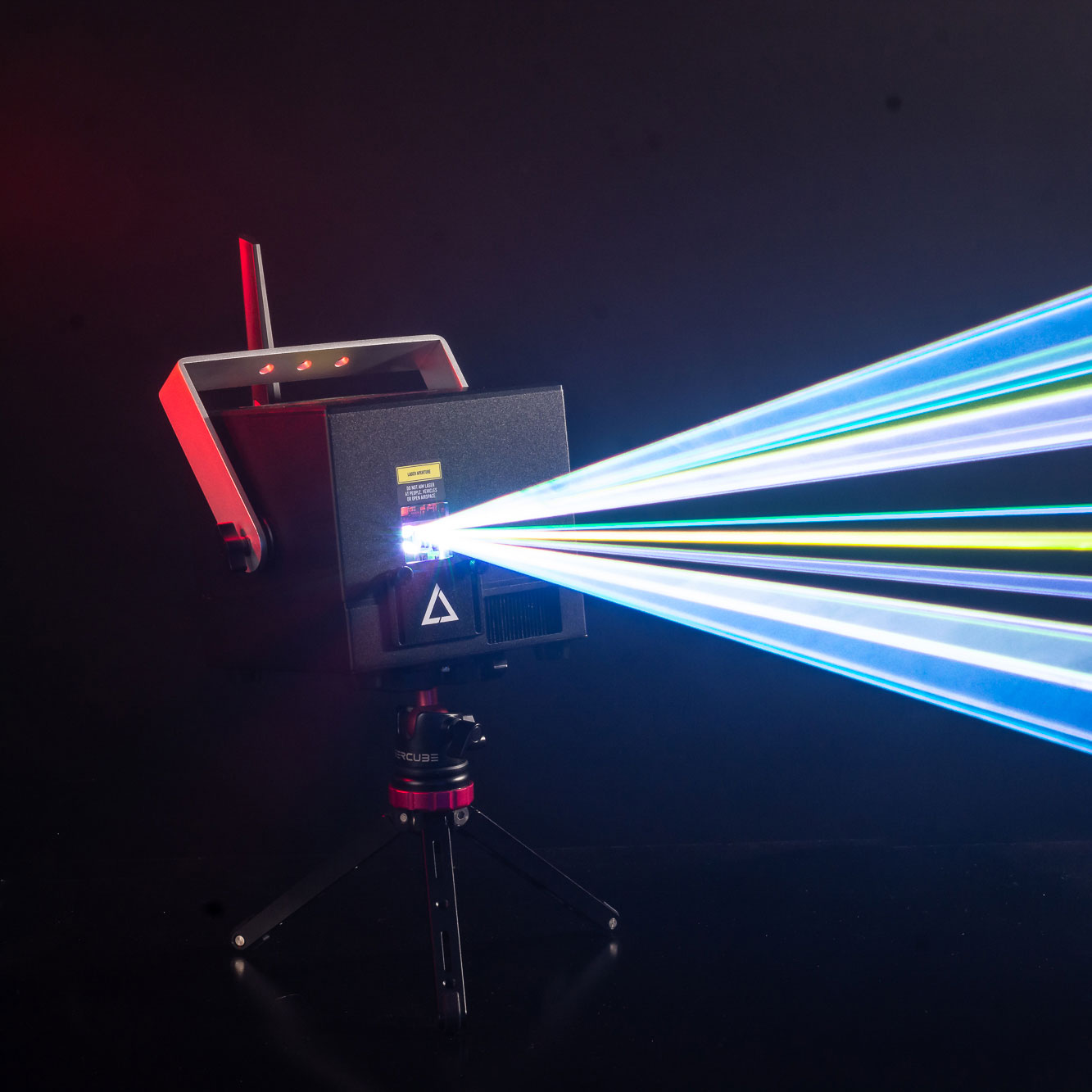
For mobile DJs, club residencies, and warehouse pop-ups, the LaserCube 2.5W WiFi delivers 470 lumens of full-color output in an ultra-compact, 3.7-pound chassis. Its internal battery runs for two to three hours completely wire-free, while its AT-25S galvo scanners, rated at 25,000 points per second at 6 degrees, easily produce liquid skies, aerial fans, and clean vector shapes without slowing down setup time.
For festival stages, expansive dancehalls, or bright commercial venues, the flagship LaserCube 10W Ultra MK2 supplies 1,405 lumens to slice clean through high-output stage washes. It features professional AT-40S scanners running at 35,000 points per second at 7 degrees, which handles intricate SVG vector artwork and logos without distortion. It also integrates native DMX, Art-Net, ILDA streaming, and an onboard standalone operating system called CubeOS for playback directly from an SD card. Producers organizing large multi-projector setups can also review this walkthrough on building a rave laser show.
Practical venue setup, atmosphere, and safety
Even high-output laser systems cannot produce aerial effects in clean air. Because laser light is highly concentrated, photons travel in a straight path until microscopic airborne particles bounce them back toward human eyes.
Pairing the projector with a compact tool like the battery-powered Nano Fogger creates the fine, suspended mist needed to reveal 3D beams overhead without smoking out the room. Placing the fogger slightly upwind lets natural room ventilation distribute an even, low-lying atmosphere across the entire projection path.
Public performances also require strict attention to crowd safety. International guidelines from the International Laser Display Association (ILDA) require overhead scanning paths to maintain at least 3 meters of vertical clearance above any floor where guests stand. For commercial events in the United States, operators also comply with federal FDA laser regulations.
Inside the software, operators can configure digital Attenuation Zones via the LaserOS tutorials menu. Drawing an inverted red blackout box cuts laser output to zero percent across defined areas, ensuring beams sweep safely over the dancefloor while keeping DJ booths, camera sensors, and direct eyelines completely protected.
Wrapping up
Delivering an electronic music show comes down to matching visual agility to track tempo, choosing scanners that can keep pace with complex geometries, and maintaining reliable venue safety. Compact, battery-powered systems eliminate the complexity of traditional stage rigs, allowing performers to bring festival-grade visual production anywhere they play.
Ready to see the full LaserCube lineup? Visit the LaserCube product page to compare models, bundles, and accessories, and find the right setup for your next show.
Frequently Asked Questions (FAQs)
What is the difference between a party light and an EDM laser light?
Do EDM laser lights require a fog machine to work?
Can you sync laser lights to DJ software automatically?
What scanner speed is recommended for live EDM shows?