

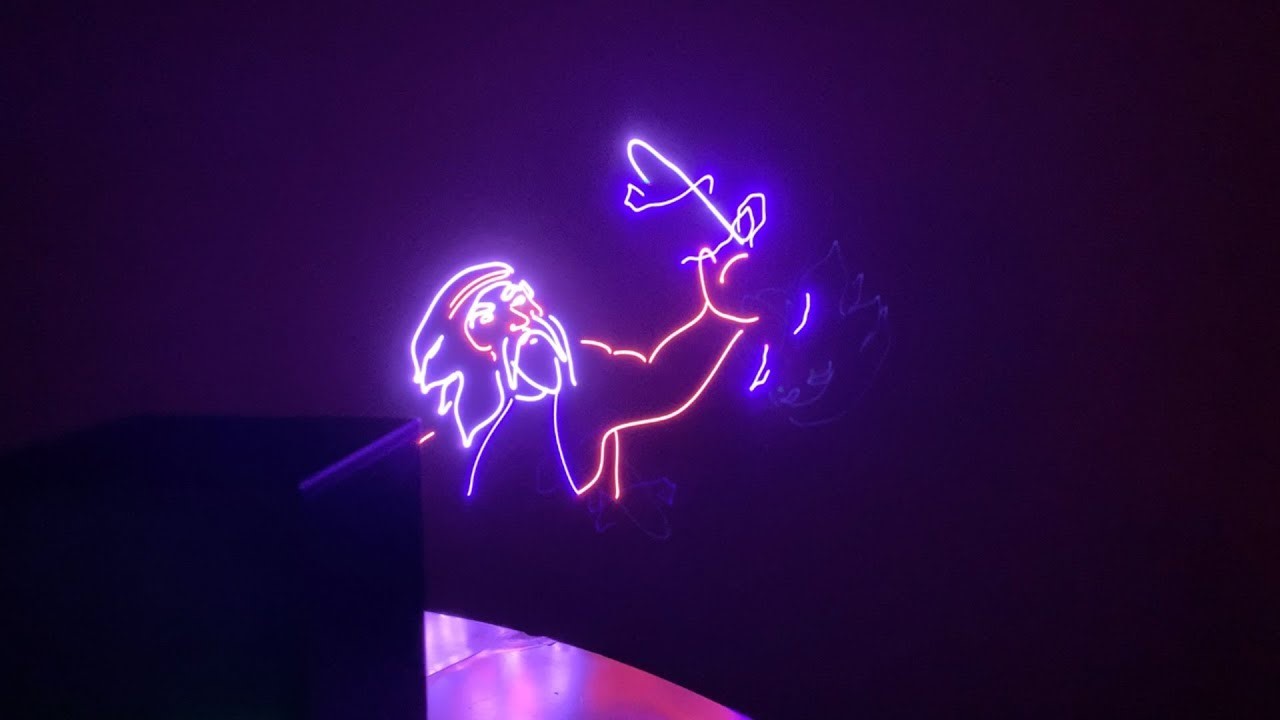
What is Laser Scanning Speed? (And Why KPPS Matters for Live Shows)
Laser scanning speed is the primary hardware metric that dictates whether projected graphics look solid and professional or jittery and distorted. Many lighting designers learn this the hard way when a custom logo turns into an unreadable, flickering mess on the wall.
No amount of software tweaking can fix a rig pushing past its physical hardware limits. Understanding scanning speed is essential to ensure the hardware matches the gig and the visuals stay crisp.
The Mechanics of a Scanning Laser Light
A scanning laser light draws an image using two high-speed, motorized mirrors known as galvanometer scanners, usually called “galvos”. Unlike traditional video projectors that project static pixels, lasers use a single bright beam moving at high velocities.
One tiny mirror inside the laser system controls the horizontal X-axis, while the other handles the vertical Y-axis. By rapidly tilting these mirrors together, the laser traces the exact outline of a shape.
The quick movement of the mirrors tricks your brain into seeing a single, continuous picture.
Breaking Down KPPS: The Speed Scan Standard
A scanning laser light draws an image using two high-speed, motorized mirrors known as galvanometer scanners, usually called “galvos”. Unlike traditional video projectors that project static pixels, lasers use a single bright beam moving at high velocities.
One tiny mirror inside the laser system controls the horizontal X-axis, while the other handles the vertical Y-axis. By rapidly tilting these mirrors together, the laser traces the exact outline of a shape.
The quick movement of the mirrors tricks your brain into seeing a single, continuous picture.
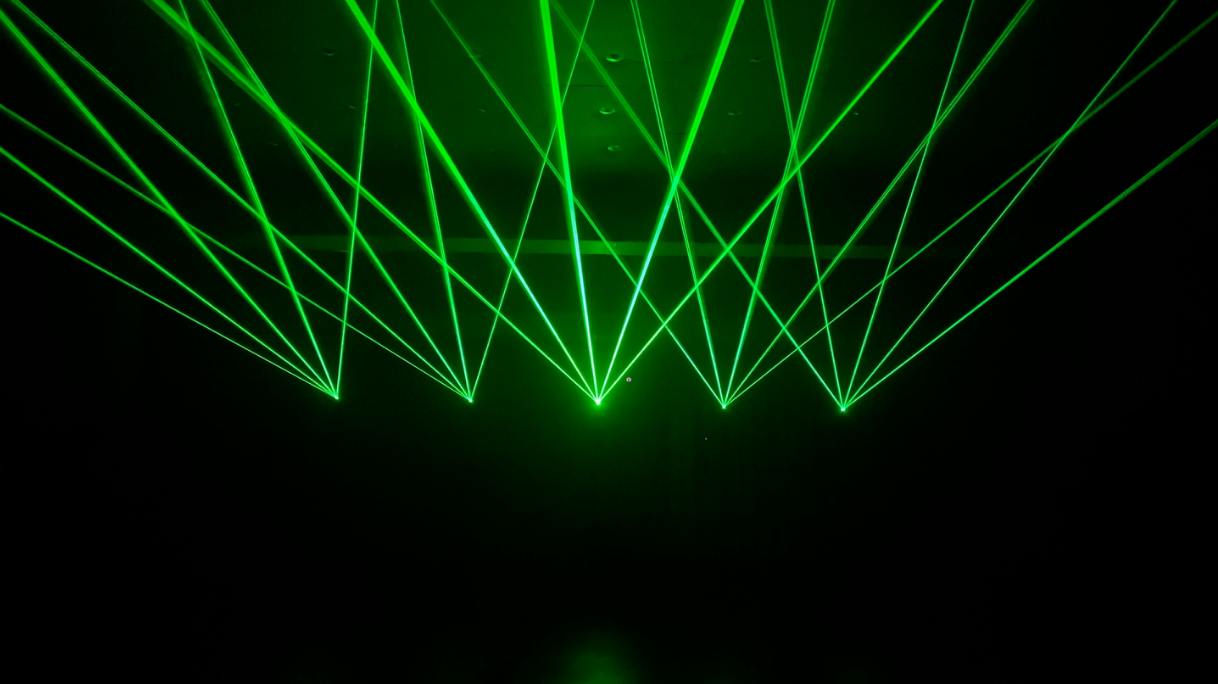
Aerial Beams vs. Complex Graphics
Complex graphics demand high scanning speeds, while atmospheric aerial beams can run flawlessly on standard hardware. Setups focused strictly on atmospheric effects offer a lot of leeway.
Shooting liquid skies, fans, and basic tunnels through fog onto a dancefloor is highly forgiving because the shapes are simple and constantly sweeping. Graphics, however, are far more demanding on the hardware.
Drawing sharp text, corporate logos, or detailed animations requires the mirrors to stop, pivot, and speed up instantly at every corner. When projecting these elements, higher KPPS is strictly necessary to keep the image crisp and prevent distorted tails on the lettering.
The Projection Angle Trade-Off
The wider an image is projected, the harder the hardware has to work; a physical rule known as the projection angle trade-off.
When increasing the projection size to fill a massive venue, the mirrors must travel a physically longer distance to draw the same shape. This extra travel distance inherently slows the scanner down.
Professional speed ratings always include a degree measurement, such as 35,000 pps @ 7°. This spec indicates exactly how fast the galvos perform at that specific width.
If a slower scanner is forced to project a massively wide image, the graphic will inevitably start to tear and distort.
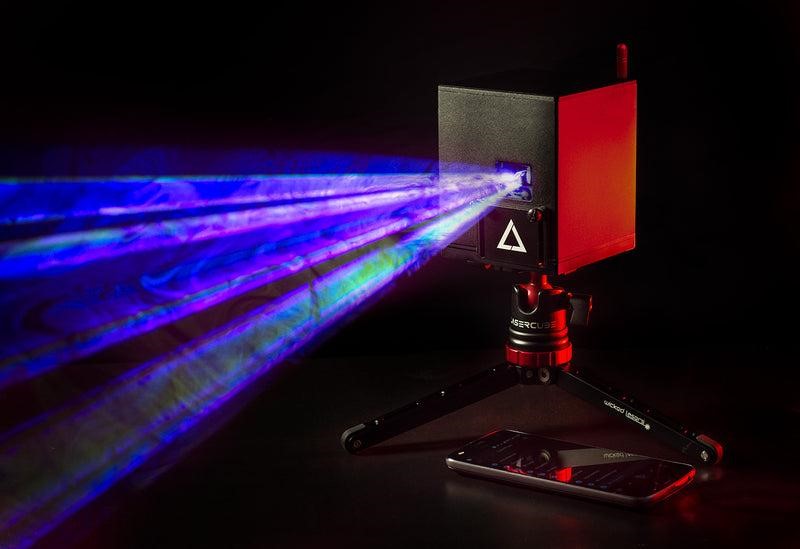
Choosing the Right Hardware for Your Gig
Hardware should always be matched to the specific gig: 25,000 pps is ideal for standard beam shows, while 35,000 pps is required for professional graphics and text.
A mobile DJ focused on fluid beam shows does not need to overspend on massive speeds. The LaserCube WiFi Series (available in 1.2W and 2.5W) is equipped with AT-25S galvo scanners rated at 25,000 pps @ 6°.
This specification serves as a sweet spot for many users, easily handling dense atmospheric effects without breaking the bank. On the other hand, event producers dealing with complex mapping and heavy text need maximum power.
For those demanding scenarios, the flagship LaserCube 10W Ultra MK2 features upgraded AT-40S galvos running at 35,000 pps @ 7°. This high-end laser system delivers the exact mechanical speed required for flawless, solid graphics in high-stakes environments.