EtherDream vs IDN: Network Laser Protocols Explained
Learn the difference between EtherDream and IDN laser protocols. Discover how native network streaming replaces heavy analog DB25 cables for live events
Visual artists often arrive at a venue and face a frustrating setup. They struggle with thick analog snakes or external hardware interfaces that refuse to communicate with their software stack. Traditional laser control relies on bulky analog DB25 cables or closed hardware setups that restrict creative freedom.
Routing separate digital-to-analog converter (DAC) boxes for every single fixture introduces multiple points of failure. This approach also creates latency risks and a massive cable mess.
Network streaming protocols offer a better way to operate. These modern protocols allow creators to drive laser projectors over standard ethernet cables. Systems supporting open standards give production professionals complete show laser software flexibility.
Move beyond analog DB25 cables
Running heavy analog DB25 cables across a venue is an outdated approach that modern network streaming completely replaces. DB25 cables are heavy, expensive, and suffer signal degradation over long distances. They also require external converter boxes at the computer side to translate the signal.
Replacing the analog snake with standard Cat5e or Cat6 ethernet allows data to stream digitally right up to the projector chassis. Event crews enjoy shorter setup times and lighter gear bags. Network cables provide robust digital signals over distances where analog cables drop voltage.
Understand the EtherDream protocol
EtherDream is the preferred open-source network protocol for creative coders, interactive designers, and visual jockeys. Originally developed alongside open-source hardware, it uses a simple TCP/UDP structure. It sends raw point data containing X, Y, and RGB coordinates directly over a network.
Because it is open and straightforward, it has native integration with software like TouchDesigner and MadMapper. This protocol works best for real-time generative art and custom code-driven visual installations. Creators building interactive experiences rely on an EtherDream connection for instant, raw data transmission.
Explore the IDN standard
The ILDA Digital Network (IDN) is the official industry-wide protocol designed to modernize professional laser show deployment. Unlike hardware-tied protocols, IDN is a formal standard meant to be built into any network-ready projector or DAC.
The broader IDN standard supports massive sample rates up to 1MHz and combined DMX and audio routing. However, portable laser applications use a highly focused version of this standard. The LaserCube implementation optimizes point streaming specifically up to 35,000 points per second.
It intentionally omits extra audio and DMX routing over the network link to keep the visual point data fast and stable. Professional timeline and visualization tools natively adopt this standard to replace the traditional ILDA laser light connection.
Stream network data directly on the LaserCube 10W Ultra MK2
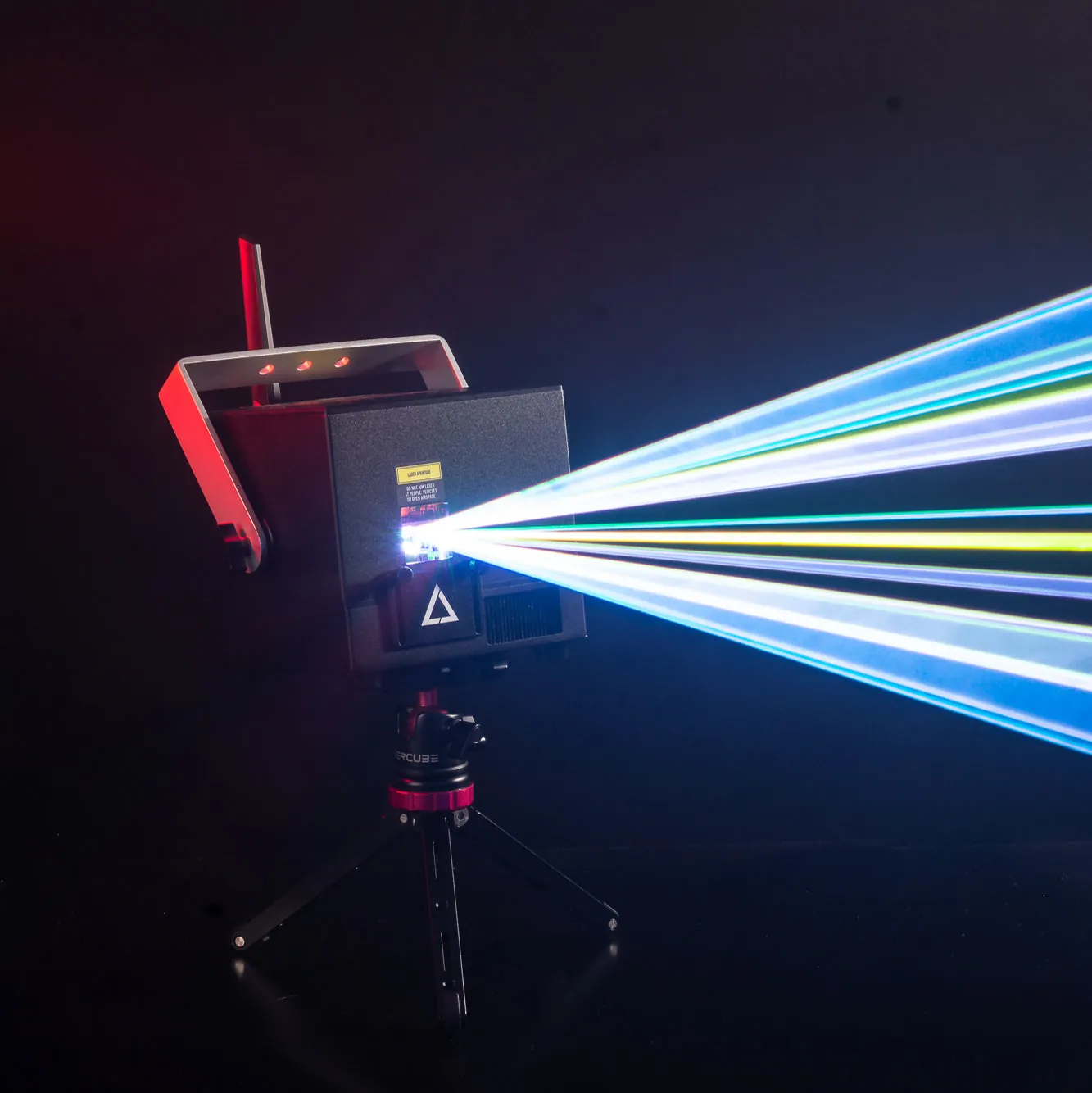
The LaserCube 10W Ultra MK2 features native network processing to run both EtherDream and IDN directly. This capability eliminates the need for any external converter boxes. This native network support is active once the latest device firmware is updated.
The projector connects directly to the network via its built-in LAN port. It also features separate RJ45 remote interlock ports on the chassis. These dedicated interlock ports let production crews daisy-chain several Ultra MK2s to a single E-Stop button.
The hardware combines this direct connectivity with a 12-bit RGB DAC and fast 35,000 points per second galvo scanners. This specific combination delivers exceptionally smooth projections for both generative art and timeline shows. Adding a Nano Fogger to the setup reveals these fast projections as massive 3D aerial beam effects.
Wrapping Up
Embracing open network standards like EtherDream and IDN removes proprietary hardware boundaries. This shift gives production professionals full creative control over their choice of software.
Moving away from analog infrastructure simplifies live setups and minimizes points of failure. To explore the complete technical specifications of a fully integrated network projector, visit the LaserCube 10W Ultra MK2 product page on laseros.com.
Frequently Asked Questions (FAQs)
Q01What is the main difference between EtherDream and IDN?
EtherDream is an open-source protocol widely used by creative coders for apps like TouchDesigner. IDN is a formal industry standard designed to replace traditional analog cables for timeline-based shows. Both allow users to stream laser data over standard ethernet.
Q02Does the LaserCube route DMX and audio over IDN?
No. The LaserCube implementation of IDN is optimized strictly for point streaming up to 35,000 points per second. It does not route DMX or audio over the network link to ensure the visual data remains fast and stable.
Q03Is an external DAC required to use TouchDesigner with the Ultra MK2?
No external digital-to-analog converter is required. The Ultra MK2 features native EtherDream support with the latest firmware, so software like TouchDesigner can send to the projector directly over a network connection (MadMapper connects in LaserOS control mode).
See it for yourself
LaserCube is a portable, battery-powered RGB laser projector, and its show software, LaserOS, is free.
Explore the LaserCube lineup