

Best DJ Laser Lighting for Live Shows (Portable Setup Guide)
Setting up traditional stage lighting can create a logistical challenge for mobile DJs and event performers. Transporting heavy trusses, taping extension cords across venue floors, and searching for open wall outlets can take up valuable preparation time before every gig.
Compact, battery-powered DJ laser lighting provides a wire-free alternative that eliminates these setup headaches. It’s a complete, self-contained system fits inside a standard backpack and deploys in under two minutes.
Check 3 specs before buying DJ laser lighting
Evaluating DJ laser lighting requires reviewing three core hardware specifications: light output, galvo scanner speed, and battery runtime. Understanding how these specifications work together helps operators select the right hardware tier for their specific venue requirements.
- Light output and perceived brightness: Milliwatts measure raw diode power, while lumens measure perceived visual brightness to the human eye. Compact laser systems generating 190 to 470 lumens easily cut through ambient room light in small to medium venues. Larger production environments require higher output, where a 10,000-milliwatt system producing 1,405 lumens maintains sharp visibility across long projection distances.
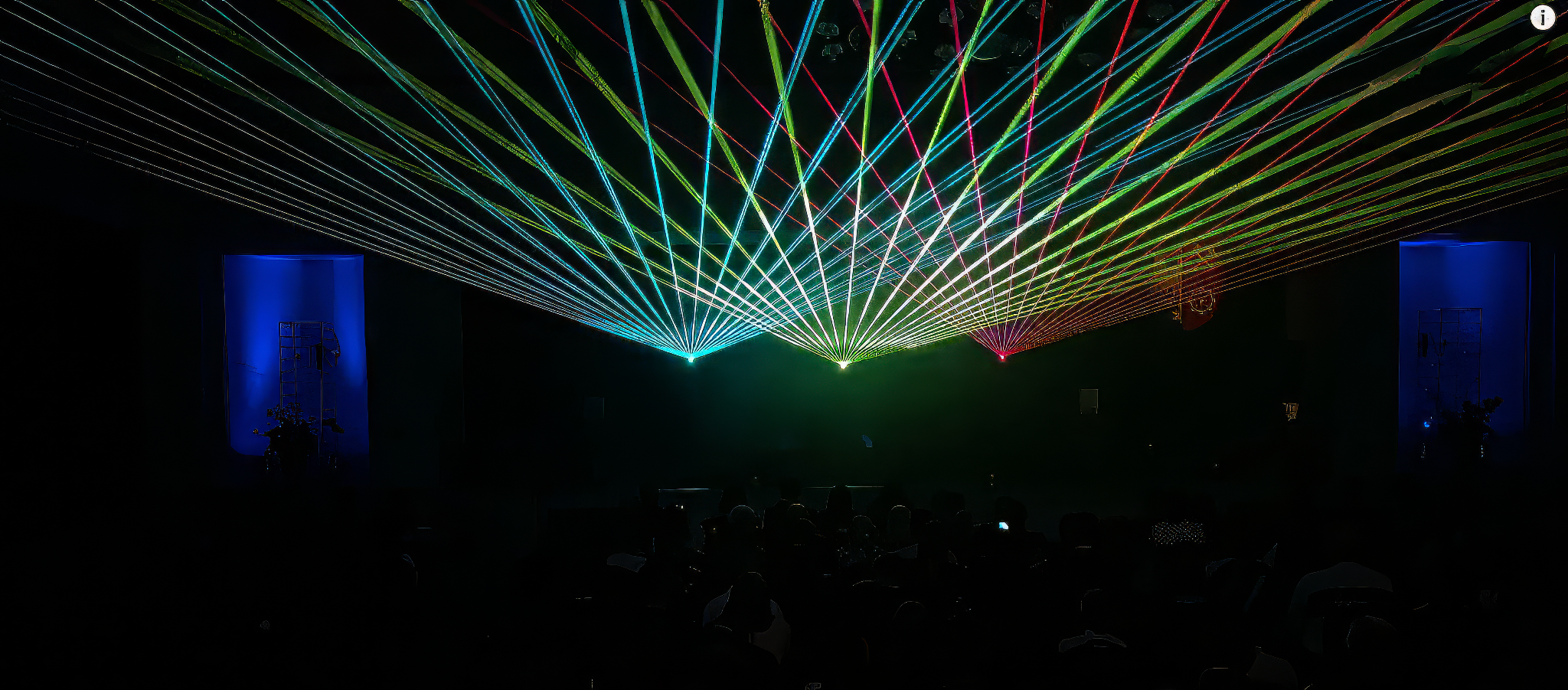
- Galvo scanner speed and graphic quality: High-speed motorized mirrors, known as galvanometer scanners or galvos, steer the light beam tens of thousands of times per second to draw shapes. Scanners running at 25,000 points per second (25kpps) project fluid liquid sky sheets, aerial fans, and rhythmic beam patterns. Upgraded galvos running at 35,000 points per second (35kpps) render detailed vector graphics, custom monograms, and crisp text without visual flickering.
- Battery runtime and wireless operation: Internal lithium-ion batteries provide complete operational freedom for mobile performers. Running full RGB laser displays for two to four hours on a single charge eliminates reliance on venue wall outlets and removes tripping hazards caused by power cables.
Match the laser setup to the venue size
Selecting the right laser hardware depends on total venue square footage, ambient stage lighting, and required control options. Matching the hardware tier to the performance space ensures proper beam intensity without overspending on unnecessary power.
- Small to medium venues: Wedding receptions, private club rooms, and house events benefit from lightweight, battery-powered systems. The LaserCube 1.2W WiFi weighs 3.7 pounds, produces 190 lumens, and runs for two to three hours on battery power. For medium venues needing extra visual presence, the LaserCube 2.5W WiFi delivers 470 lumens within the same compact chassis to cut through higher levels of ambient venue lighting.
- Large venues and festival stages: Expansive performance spaces and commercial installations demand higher light output and versatile controller connections. The flagship LaserCube 10W Ultra MK2 generates 1,405 lumens and features upgraded 35kpps galvo scanners for complex graphics. This professional model integrates DMX input and output, Art-Net, ILDA ports, USB MIDI, and an onboard operating system called CubeOS for standalone playback from a MicroSD card.
- Standalone and wireless control options: Mobile performers often wonder if running a professional show requires a dedicated laptop at every gig. Wireless models control directly from a mobile tablet or phone, while standalone systems read pre-loaded shows directly from an SD card or MIDI controller without needing a computer nearby.
Use atmospheric haze to reveal 3D aerial beams
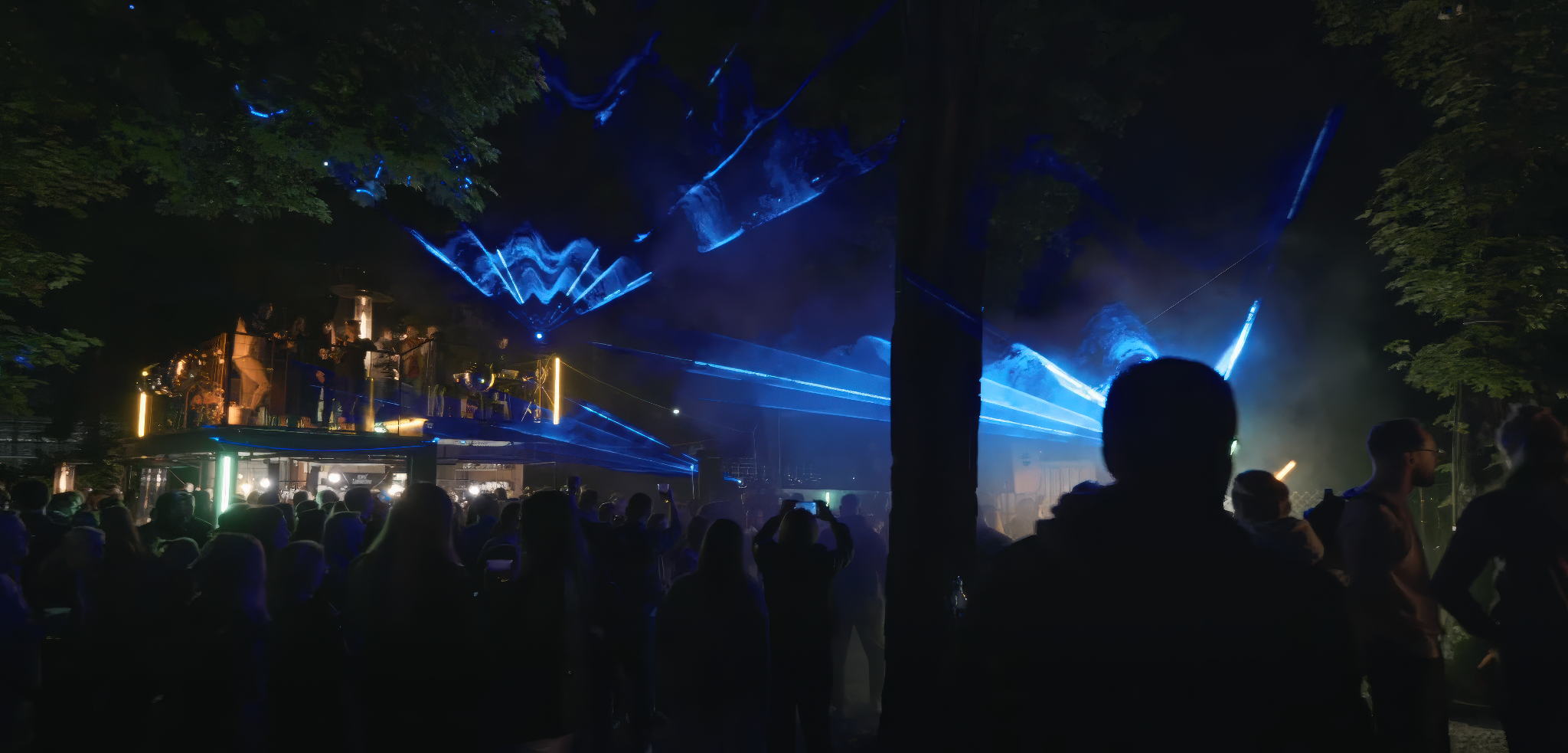
Laser light travels invisibly through clear air, requiring airborne particles from atmospheric haze or fog to reflect the beam toward human eyes. Light must strike physical matter in open space to register on the retina, which dictates how different visual effects appear.
- Surface projections: Wedding monograms, brand logos, and custom text project clearly onto solid walls without atmospheric haze. These flat surface graphics maintain high contrast on any solid background because the beam lands directly on physical matter.
- Volumetric 3D aerial effects: Overhead tunnels, fanning sheets, and liquid skies require suspended micro-droplets to show the light path mid-air. These floating particles catch passing light and scatter a portion of the beam back for the crowd to see.
- Battery-powered haze options: Pairing a portable laser projector with a compact battery-powered fogger, such as the Nano Fogger, creates a completely wire-free aerial display rig. A light water-based haze creates an even mist that reveals 3D beams without filling the venue with dense smoke or setting off sensitive fire alarms.
Protect audience eyelines with digital safety zones
Professional laser control software enables operators to block laser light from scanning audience eyelines, camera sensors, or stage equipment. Digital masking guarantees audience safety while maintaining high visual impact overhead.
- Software Attenuation Zones: Control applications like LaserOS allow operators to draw digital Attenuation Zones over sensitive regions in the venue. When galvo scanners cross into a defined blackout rectangle or circle, laser diode power drops to zero percent instantly.
- Physical elevation rules: International safety standards require elevating laser projectors on heavy-duty tripods so primary scanning beams remain at least 3 meters above audience floor level. This elevation prevents direct eye exposure while beams sweep over the crowd.
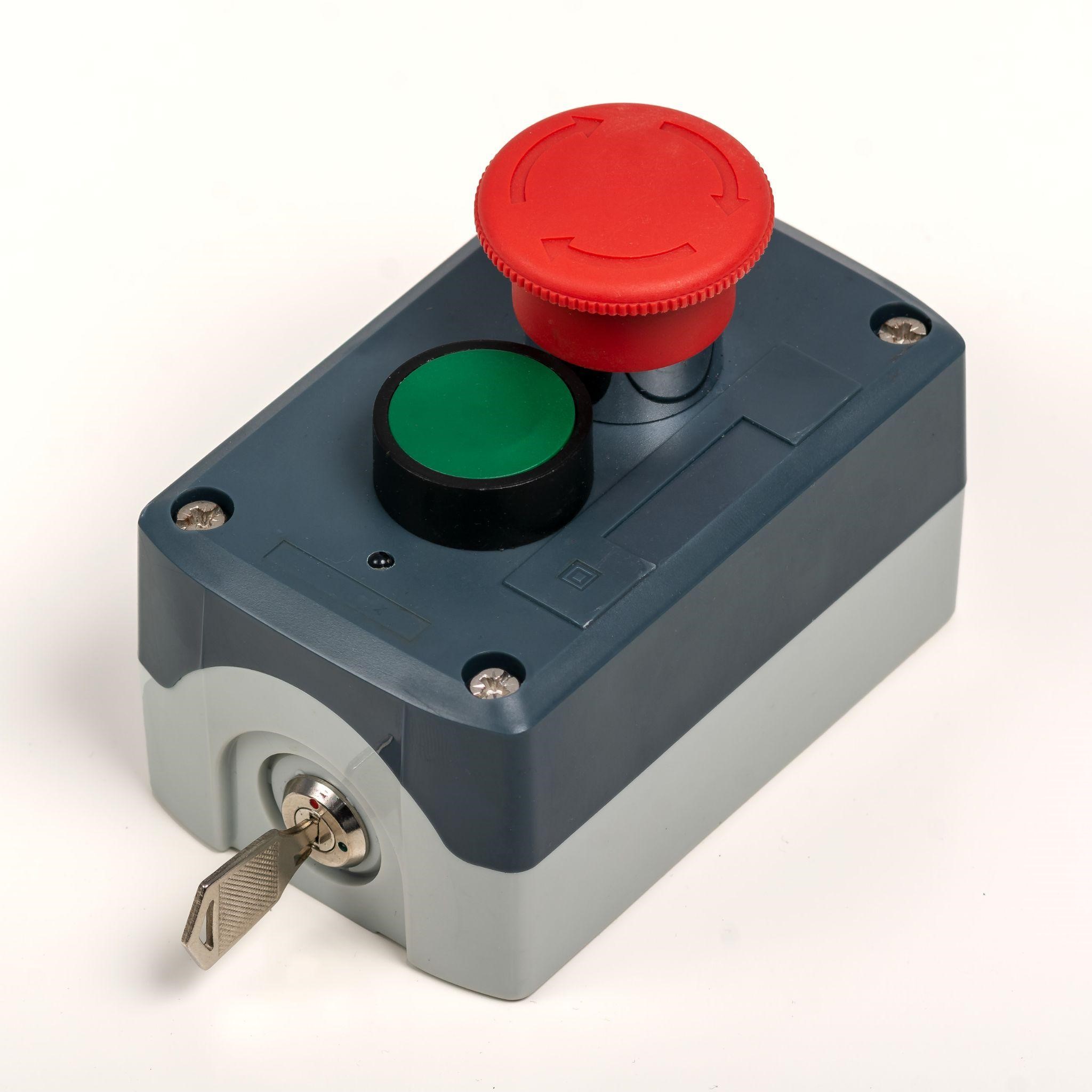
- Hardware interlocks and compliance: Commercial operators in the United States maintain regulatory compliance through FDA EZ-Variance filing guidelines included with hardware shipments. Emergency stop buttons connect through standard RJ45 cables, allowing daisy-chained shutoff control across multiple units on stage.
Wrapping up
Modern DJ laser lighting replaces heavy traditional rigs with compact, battery-powered hardware that delivers high-speed galvo graphics, full RGB color mixing, and simple software control. Elevating projectors on tripods and applying digital safety zones ensures smooth, safe operation across any performance space.
Ready to explore portable laser systems for upcoming live shows? Visit the official LaserCube product page to compare models, accessories, and complete event bundles.
Frequently Asked Questions (FAQs)
What is the best DJ laser light for beginners?
Can the LaserCube be used as a DJ laser projector for large events?
How does LaserCube compare to other professional DJ lights?
Is the LaserCube legal?
LaserCube offers a balance of high-power projection, versatility, and software compatibility, often outperforming other projectors in its price range.
What’s the difference between a DJ light and a DJ laser projector?
A DJ light typically offers basic beams and colors, while a DJ laser projector like LaserCube enables full customizability, including animated patterns and vector graphics.
Are there specific safety precautions for using LaserCube at events?
Yes, always position beams away from the audience, use protective gear as needed, and follow any local regulations for laser use.
Where can I buy LaserCube DJ laser lights for sale?